
Design for Additive Manufacturing (DFAM) transforms traditional design processes by enabling more efficient, innovative, and cost-effective solutions tailored for additive manufacturing technologies. This approach ensures that designs are optimized for 3D printing, making it possible to create complex geometries that were previously difficult or impossible to manufacture. By integrating advanced simulation, material selection, and process planning, DFAM accelerates product development cycles while maintaining or improving performance, reducing weight, and cutting costs.
This solution is ideal for industries where innovation, customization, and rapid prototyping are essential, such as automotive, aerospace, medical devices, and consumer goods. By leveraging powerful tools, businesses can design parts with greater precision and functionality, resulting in improved product quality and faster time-to-market.

In today’s fast-paced environment, data-driven project management is essential for ensuring projects are delivered on time and within budget. By leveraging real-time data, teams can track progress, manage resources efficiently, and identify risks early. This approach enables quick decision-making, reduces delays, and optimizes project outcomes.
Collaboration tools allow teams to work seamlessly across functions and geographies, sharing information in real time. By integrating advanced analytics, decision-makers can monitor project health, forecast potential challenges, and allocate resources more effectively. This integrated solution fosters transparency, improves coordination, and drives better project performance across the board.

In today’s competitive manufacturing landscape, the integration between design and manufacturing workflows is critical for achieving higher efficiency, reduced costs, and faster time-to-market. When design and manufacturing processes are disconnected, errors, delays, and inefficiencies can arise, slowing down production and increasing operational costs. A seamless connection between these processes ensures that design intent is faithfully executed during production, improving product quality and reducing the need for rework.
3DEXPERIENCE provides a unified platform that integrates design, engineering, and manufacturing processes in real-time, enabling manufacturers to collaborate across departments and locations. By providing end-to-end solutions, 3DEXPERIENCE helps optimize the entire lifecycle—from initial product concept through to production and final delivery. This integrated approach ensures that design changes are automatically communicated to the manufacturing team, reducing lead times, improving coordination, and minimizing errors. Whether for automotive, aerospace, industrial equipment, or consumer goods, 3DEXPERIENCE enhances manufacturing efficiency by bridging the gap between product design and manufacturing execution.

Design reliability is a key factor in ensuring that products perform as expected throughout their lifecycle, with minimal risk of failure. In industries ranging from automotive to aerospace, electronics to consumer goods, the ability to design products that can withstand real-world conditions while maintaining performance and durability is crucial. By leveraging advanced simulation and analysis tools, manufacturers can validate designs before they go to production, identifying potential weaknesses early and making necessary adjustments to ensure reliability.
SIMULIA provides powerful simulation-driven design capabilities, enabling engineers to assess product reliability under various operating conditions, including stress, thermal, and fatigue analysis. By simulating these real-world conditions, manufacturers can ensure that products not only meet design specifications but also exceed customer expectations for longevity and performance. With SIMULIA, companies can enhance design processes, reduce testing time, and minimize the risk of failures, ultimately improving product quality and reducing costs.
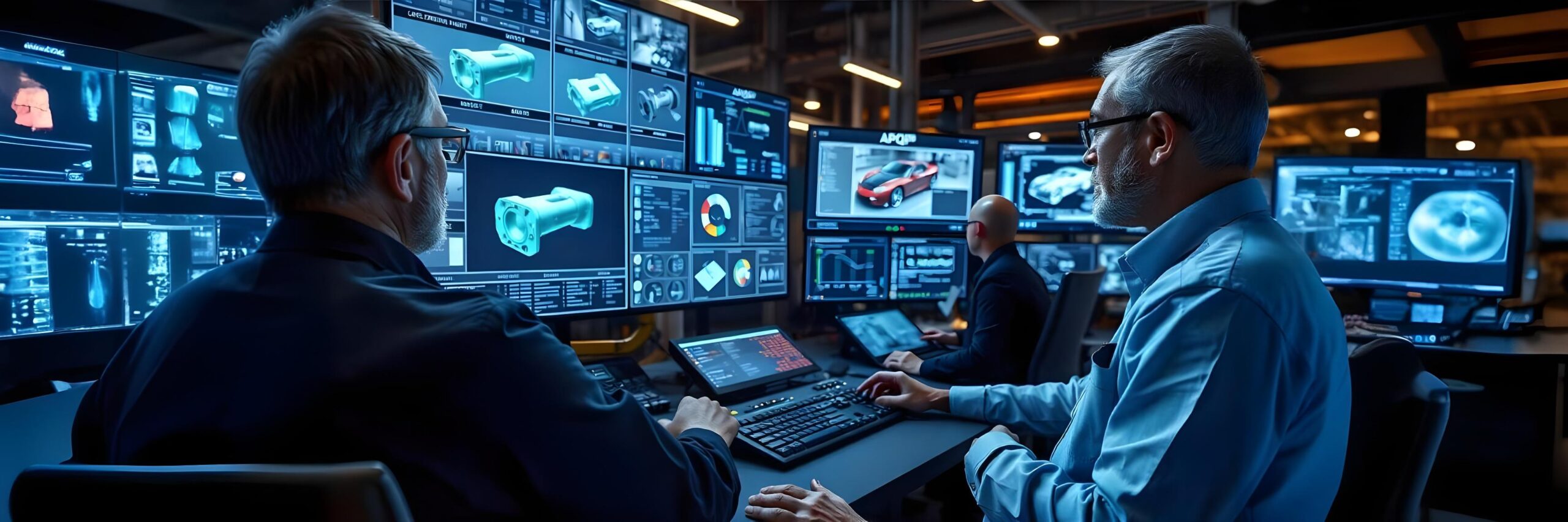
Advanced Product Quality Planning (APQP) is a critical process in the automotive industry, originally developed to ensure products meet stringent OEM and consumer quality standards. Automotive suppliers often face challenges such as lack of real-time visibility, inconsistent process adherence, fragmented communication, and difficulties in managing the extensive data associated with product development. These challenges can result in delays, quality issues, and inefficiencies, ultimately impacting cost and delivery timelines.
Initially created for the automotive industry, APQP is now being increasingly adopted by aerospace suppliers, who face similar challenges due to the complexity and high quality standards of their products. EDS Technologies plays a key role in supporting automotive and aerospace suppliers by providing the tools and expertise necessary to streamline and optimize the APQP process. Through 3DEXPERIENCE platform, we enable suppliers to gain real-time visibility, improve collaboration, and ensure process adherence, ultimately driving better product quality and faster time-to-market. By integrating powerful tracking, data management, and analytics capabilities, EDS Technologies ensures that APQP processes are managed efficiently and effectively, helping suppliers mitigate risks and enhance decision-making.

Human ergonomics is essential for enhancing safety, comfort, and productivity in industries such as automotive, industrial equipment, and heavy machinery. Designing vehicles, machinery, and workspaces that are optimized for human factors reduces operator fatigue, improves posture, and prevents injuries. Optimizing ergonomics ensures operators can work efficiently and safely over extended periods.
With RAMSIS, manufacturers can simulate and evaluate human factors in their designs, optimizing seating, visibility, reachability, and control interfaces. This ensures that vehicles and industrial equipment are designed for maximum user comfort and safety, meeting ergonomic standards while enhancing the operator’s experience. RAMSIS offers virtual testing, reducing the need for physical prototyping and enabling a faster, more cost-effective development process. This approach results in higher safety compliance, reduced risk of injury, and better overall performance in the workplace.